What Is Freight Transport? Complete Beginner’s Guide
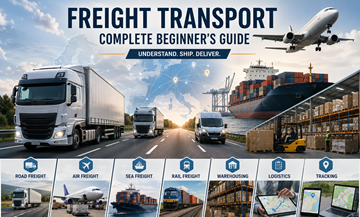
In this complete beginner’s guide, you will learn what freight transport is, how it works, which freight transport methods exist, what documents are used, how prices are calculated, and why freight logistics is essential for businesses and private customers across Europe.
What Is Freight Transport?
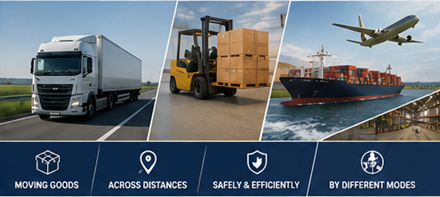
Freight transport refers to the movement of goods, cargo, and commercial shipments from one location to another. The process can involve local deliveries, national distribution, or international transport across borders. Freight can include pallets, parcels, industrial products, raw materials, machinery, food, vehicles, medical supplies, and many other types of cargo.
The goal of freight transport is to move goods safely, efficiently, and on time between suppliers, warehouses, factories, retailers, and customers. Modern freight logistics combines transportation, route planning, warehousing, customs handling, and delivery tracking.
- Road freight transport
- Air freight transport
- Sea freight shipping
- Rail freight transport
- Intermodal transport
- Express and courier delivery
How Freight Transport Works
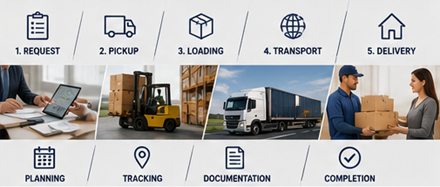
Freight transport involves several coordinated logistics steps. The process starts when a customer creates a shipping request and ends when the goods are delivered to the receiver. Depending on the shipment type, freight may pass through warehouses, customs checkpoints, ports, or distribution centers.
- Customer creates a transport request
- Pickup and delivery addresses are confirmed
- Vehicle or transport method is selected
- Transport price is calculated
- Carrier accepts the shipment
- Driver or logistics team plans the route
- Goods are loaded and secured
- Shipment is transported to destination
- Receiver accepts the delivery
- Transport documents are completed
Large logistics companies often use digital freight platforms, GPS tracking systems, transport management software, and warehouse systems to manage freight operations efficiently.
Different Types of Freight Transport
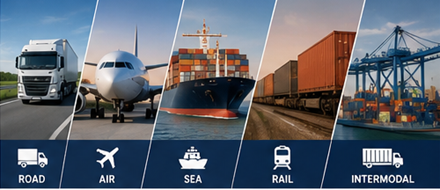
There are multiple freight transport methods used in Europe and worldwide. Each method has advantages depending on cargo size, urgency, destination, and budget.
- Road transport for flexible regional and international deliveries
- Air freight for urgent and high-value shipments
- Sea freight for large international cargo volumes
- Rail freight for bulk and long-distance transport
- Intermodal transport combining multiple transport methods
Road freight remains the most commonly used transport method in Europe because trucks can directly access warehouses, factories, shops, and private addresses.
Road Freight Transport Explained
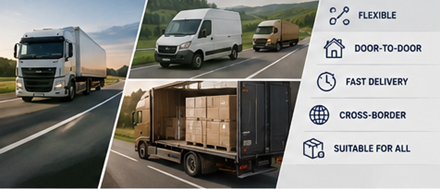
Road freight transport uses vans, trucks, trailers, and heavy goods vehicles to move cargo across regions and countries. It is one of the fastest and most flexible transport solutions for European logistics.
Road transport is commonly used for express deliveries, pallet transport, retail distribution, industrial cargo, refrigerated goods, and groupage shipments.
- Door-to-door delivery
- Fast transit times
- Flexible routes
- Suitable for small and large shipments
- Efficient for cross-border EU transport
Common Freight Cargo Types
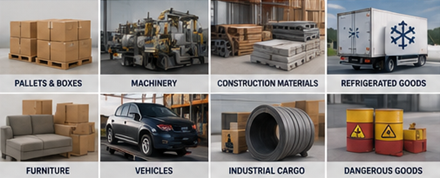
Freight transport companies move many different cargo categories. Each shipment type may require specific vehicles, packaging, temperature control, safety procedures, or transport documents.
- Palletized goods
- Parcels and boxes
- Construction materials
- Industrial equipment
- Food and refrigerated cargo
- Furniture and household goods
- Vehicles and machinery
- Dangerous goods (ADR)
- Containers and oversized cargo
Freight Transport Vehicles
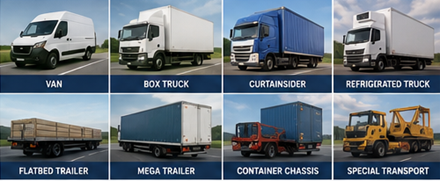
Different freight shipments require different transport vehicles. Logistics companies select vehicles based on cargo dimensions, weight, route, and delivery urgency.
- Cargo vans for small deliveries
- Box trucks for city and regional transport
- Curtainsider trailers for pallet transport
- Refrigerated trucks for temperature-sensitive goods
- Container chassis for port logistics
- Flatbed trailers for heavy machinery
- Mega trailers for high-volume cargo
Freight Transport Documents
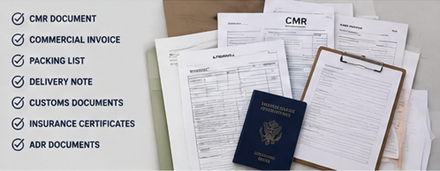
Transport documentation is essential in freight logistics. Documents help identify shipments, confirm ownership, ensure legal compliance, and support customs procedures.
- CMR transport document
- Commercial invoice
- Packing list
- Delivery note
- ADR documents for dangerous goods
- Customs declarations
- Insurance certificates
Digital freight platforms increasingly use electronic transport documents and real-time tracking systems to simplify logistics operations.
How Freight Prices Are Calculated
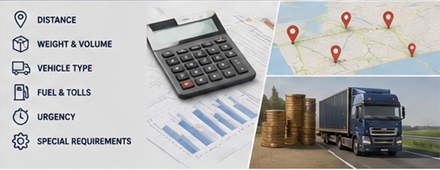
Freight transport pricing depends on many factors. Logistics companies calculate prices based on shipment size, weight, transport distance, urgency, and vehicle type.
- Distance between pickup and delivery
- Cargo dimensions and weight
- Vehicle category
- Fuel and toll costs
- Urgency and delivery speed
- Cross-border customs procedures
- Special handling requirements
Express and same-day transport services are usually more expensive because they require faster scheduling and dedicated vehicles.
Domestic vs International Freight Transport
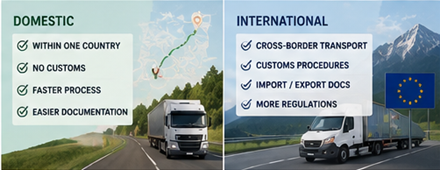
Domestic freight transport takes place inside one country, while international freight transport crosses borders between countries. International logistics often involves customs procedures, VAT regulations, import documentation, and cross-border compliance rules.
The European Union has simplified freight movement between member states, making international road transport faster and more efficient compared to many other regions.
The Importance of Freight Transport
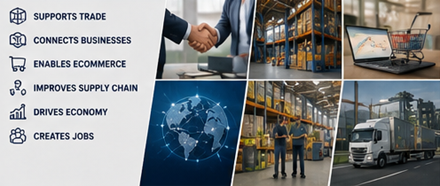
Freight transport supports nearly every industry and business sector. Without logistics operations, stores would not receive products, factories would stop production, and online commerce would not function efficiently.
- Supports international trade
- Connects manufacturers and customers
- Enables ecommerce deliveries
- Improves supply chain efficiency
- Supports industrial production
- Creates jobs in logistics and transport
Challenges in Freight Transport
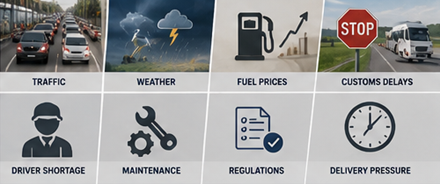
Freight transport companies face many operational challenges every day. Delays, weather conditions, rising fuel prices, border controls, and driver shortages can impact delivery schedules and transport costs.
- Traffic congestion
- Fuel price fluctuations
- Customs delays
- Driver shortages
- Vehicle maintenance
- Environmental regulations
- Delivery time pressure
Technology in Modern Freight Transport
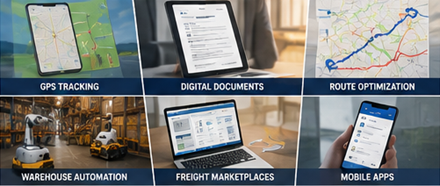
Modern logistics companies increasingly use technology to improve freight operations. Digital platforms help carriers, customers, and drivers communicate in real time and optimize delivery processes.
- GPS shipment tracking
- Electronic transport documents
- Route optimization software
- Warehouse automation
- Digital freight marketplaces
- Mobile logistics applications
Conclusion
Freight transport is the foundation of modern trade and logistics. From local deliveries to international cargo operations, freight logistics connects businesses, suppliers, warehouses, and customers across Europe and worldwide.
Understanding how freight transport works helps companies and private customers choose the right shipping solutions, reduce costs, improve delivery efficiency, and ensure safer transport operations.
Frequently Asked Questions
What is freight transport?
Freight transport refers to the movement of goods, cargo, and commercial shipments from one location to another using trucks, vans, trains, ships, airplanes, or other transport methods.
What is the difference between freight and cargo?
Cargo refers to the physical goods being transported, while freight usually describes the commercial transport service and logistics process used to move those goods.
Which freight transport method is most common in Europe?
Road freight transport is the most commonly used method in Europe because it offers flexible door-to-door delivery for both local and international shipments.
What documents are used in freight transport?
Common freight transport documents include the CMR document, commercial invoices, packing lists, delivery notes, customs papers, and cargo insurance certificates.
How are freight transport prices calculated?
Freight prices are usually calculated based on transport distance, cargo size, shipment weight, vehicle type, fuel costs, tolls, urgency, and special handling requirements.
What is international freight transport?
International freight transport involves moving cargo between different countries and may require customs procedures, import/export documentation, and cross-border logistics planning.
What industries use freight transport?
Almost every industry relies on freight transport, including retail, manufacturing, construction, automotive, ecommerce, food distribution, healthcare, and industrial production.
What is express freight transport?
Express freight transport is a fast shipping service designed for urgent deliveries with shorter transit times and priority handling.
eXus Dev